Wednesday, 11 June 2014

Check out my upcoming symposium....


The Legal Intersections Research Centre (LIRC) invites you to a Symposium
Through the Looking Glass: the Framing of Law & Justice through Popular Imagination

Date:            Friday 4 July 2014
Time:           9am – 5pm
Location:   67.202 – Moot Court
Register:   Online by 27 June
Registration is free. Places are limited


Following Alice, who contemplates, and then explores, the world on the other side of the looking glass, this symposium calls upon participants to reflect on and encounter the concepts of law and justice as broadly framed within popular imagination via the portal of popular cultural texts. Under this banner, presenters will investigate and revisit issues that map the different dimensions of a cultural legal studies approach to popular culture and its relationship with legal knowledge, law practice and jurisprudence covering issues such as:


·       The role of legal storytelling in transforming, mirroring, creating, and sustaining legal consciousness.
·       The framing and/or distortion of law within popular images and narratives.
·       The transformation of meaning in relation to justice, and/or how justice (dis)connects with law.
·       The (de)mystification of law through popular stories.

Keynote Speaker: JESSICA SILBEY
Biography: Jessica Silbey is a law professor at Suffolk University Law School in Boston, Massachusetts, USA. Professor Silbey’s scholarly interests and expertise is in the cultural analysis of law, exploring the law beyond its doctrine to the contexts and processes in which legal relations develop and become significant for everyday actors.  Professor Silbey has published widely in the field of law and film, exploring how film is used as a legal tool and how it becomes an object of legal analysis in light of its history as a cultural object and art form. She recently co-edited a book about law and television entitled Law and Justice on the Small Screen (2012).

Other presenters: Jason Bainbridge, Penny Crofts, David Papke, William MacNeil,   Cassandra Sharp, Kieran Tranter 

Convener: Dr Cassandra Sharp, Senior Lecturer, School of Law

Faculty of Law, Humanities and the Arts, UOW e: csharp@uow.edu.au

Sunday, 11 May 2014

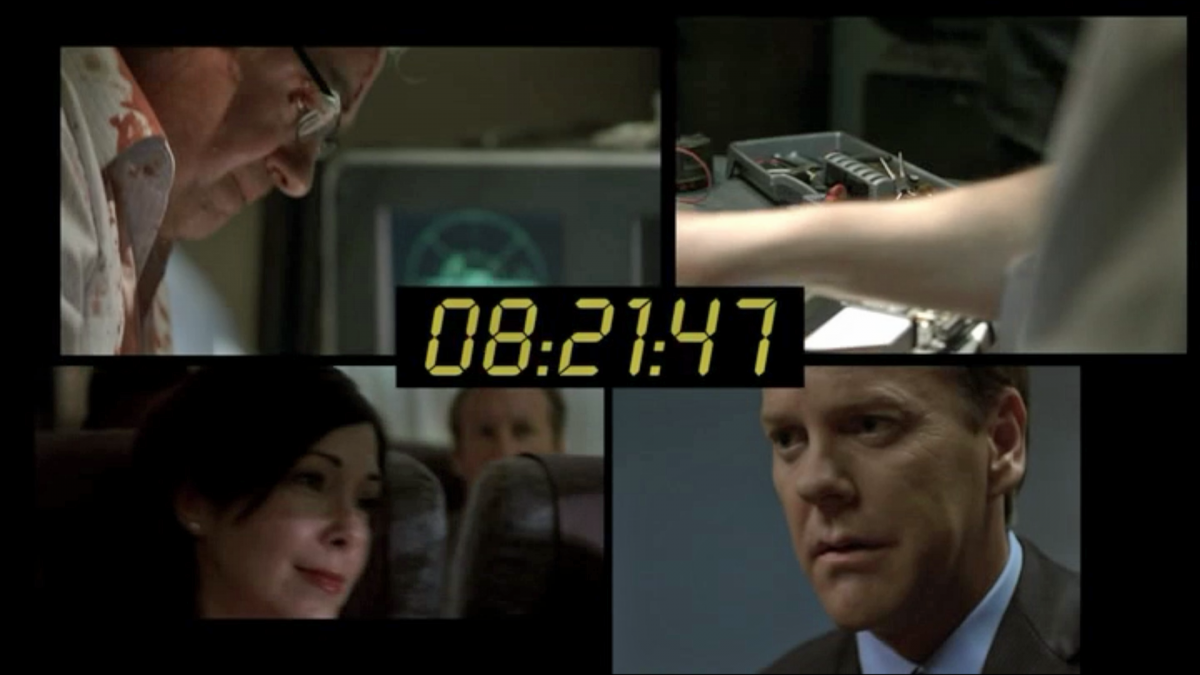
‘Anti-hero’ Jack Bauer and his ticking clock returns to our television screens…

The return of Jack Bauer


Its been four years since Jack Bauer has been visible on our screens, but this week he comes out of hiding to once again beat the clock to thwart yet another conspiracy/terrorist produced chaos. 


Kiefer Sutherland spent 10 years playing the role of Jack Bauer (winning a Golden Globe and Emmy) and is back to reprise this anti-hero character who does what needs to be done in order to achieve justice.


Retaining the ‘real time’ method of narration made famous in the previous 10 seasons, 24: Live Another Day, restarts the ticking clock on another suspenseful, high-octane race to prevent an unthinkable terrorist attack and save the world. With the slight modification of covering 12 hours in real time, rather than the usual 24, Live Another Day continues to utilize the pulse-pounding, fast-paced format with split screens and interweaving storylines, and of course the signature Jack Bauer ‘I’m sucking a lemon’ scowl that tells you he is on a mission.
 
Set and shot in London, the suspenseful series once again follows the exploits of Jack, now a fugitive from justice. Despite his exiled status, he nevertheless seems yet again willing to risk his life and freedom to avert another global disaster. After 4 years, Bauer is up to his old tricks, trusting no-one, breaking the law, planting bugs, kicking some serious butt, and living in the land of all things ethically grey!

So…what is it about Jack Bauer?


In this iteration of 24, Jack is the ultimate ‘outsider’ to law – he is a fugitive with an instinct for violent action in response to possible terrorist activity. 

He follows no rules or laws except his own, has a unique instinct for violent action, and his isolation and alienation from the legal institutions he used to serve, has forced him to fall back completely on his own extra-legal ways. It is this extra-legality that we seem to love – the uncanny ability Jack possesses to know that torture, although illegal, is not only justified, but entirely effective and therefore necessary.


As the ‘outsider’ Jack is the damaged anti-hero who we love to see break the law in order to serve the greater good. As co-creator of 24 Robert Cochran says: 

"He doesn't often do the right thing, but he does the right thing by breaking the rules – that's kind of exciting and people want to root for that."


This is most evident in the trailer which you can see if you click here

In the clip, CIA operations chief Steve Navarro (Benjamin Bratt) is talking to Jack Bauer after two Russian diplomats are killed, and he says:
 
“I know how many lives you’ve saved — how much the country is in your debt – but they’re just going to see a man who snapped... Killing and mutilating with no regard to law or conscience. A man whose country now labels him a criminal; a terrorist.”
 
It will be interesting to see how long Jack Bauer will remain an enemy of the state in this latest season of 24. 

Will his ‘outsider’ status prove useful to the ultimate goal of saving the world from terrorist actions? 

Even more interesting for my law and pop culture students is the question surrounding the legitimacy of law in that world, and the ultimate efficacy of law in the search for justice. 

Is extra-legality now the necessity for effecting true justice? 

Let’s see what Jack tells us over the 12 hours of Live Another Day….


Thursday, 3 April 2014

Revenge and Justice...

Why we love a good ‘revengenda'.


The relationship between justice and revenge is a topic that has been of great importance for hundreds of years in literature, philosophy, legal theory and particularly pop culture. Westerns have made a roaring trade over the years spinning the revenge yarn into compelling action and drama; the vigilante superhero of comics and screen are most times spurred into action as a vengeful response to the loss of loved one at the hands of corruption and villainy; and television crime dramas frequently use the underlying revenge theme as a background story to character development. But is revenge the same thing as justice?

As many scholars have noted, there is an ever-present consistency in the expectation that our legal system is based on the belief that revenge and justice must be differentiated – ie we must discourage the passion of revenge in favour of the reason and discipline of law’s officially sanctioned retributive measures. The idea is that legal justice can be “retributive without being vengeful. Vengeance must be kept at bay, so the argument goes, because it represents an unwarranted concession to an anger and passion that knows no limits.”[1]

Yet…why does justice sometimes feel like an unsatisfactory substitute for revenge? Why do the texts and characters of popular culture so often portray a deep longing to exact some sort of revenge that exists outside the justice provided by the law?


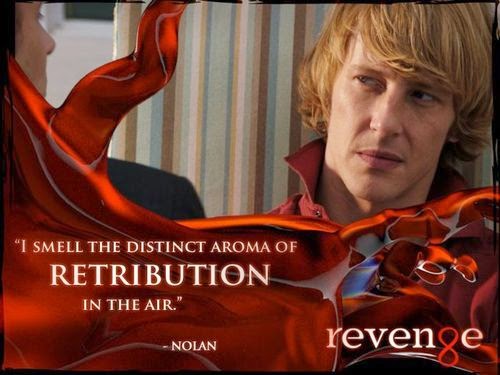
This week in my Law and Popular Culture class, we have been exploring Revenge and The Mentalist as two TV dramas that portray legal ‘outsiders’ enacting their form of revenge via methods external to the law and the official justice system. Both these series deploy revenge as a key plot device to motivate the protagonist. 


Emily Thorne and Patrick Jayne have each endured significant heartache and loss at the hands of villains. And both circumvent the law in order to do bring about their personal revenge. Of course, in Emily’s case, she is forever breaking the law to bring her schemes to fruition according to her long term ‘Revengenda’! On the other hand, Jayne’s dissonance with the law is more behind the scenes. Although technically not a police officer or detective (he is a consultant with the California Bureau of Investigations), he has access to legal processes and information within the criminal justice system. Jayne uses this insider position to his advantage in order to secretly discover the identity and location of Red John – with the ultimate revengenda to kill him before the authorities catch up with him. In both cases the desire for revenge is so strong that it overrides any need to obey the rules of the legal system, or to respect the official justice system.


For both Emily and Patrick, revenge is inextricably linked to a personal, subjective ideal of retributive justice, and they see this as different to the ‘justice’ (un)fulfilled by the law. To these central characters, the offenders must pay. If the law cannot actually effect justice in the sense of ‘payback’, then the protagonists in these series must provide it themselves. 

For Patrick, the criminal justice system is not only slow and ineffectual in capturing Red John, but he is not convinced that, even if Red John was to be apprehended, the legal system could/would provide the retributive satisfaction he seeks. Patrick is single-minded – he wants payback, and he does not hide his desire to kill Red John as the only ‘justice’ suitable for this particular criminal. 

Emily too, spent many years watching the corruption and villainy of her father’s murderers go unpunished by the official justice system.  Her constant vow is to exact her excruciatingly drawn out revenge on those responsible. 

Emily has zero expectation that the justice system would give these people what they deserve. To her, official justice is ineffectual, spineless and ultimately absent. Revenge in the form of vengeance is the only justice she is concerned with….


And oh how it makes for gripping television soap-opera/drama! In both these shows, there is somehow something deliciously voyeuristic about following the journey of the central character exacting their revenge! We want them to succeed in their extra-legal revengendas! We want the offenders to pay, and for that payback to be glorious. Why is that? Is it because we crave retribution? Or have an undeniable desire to see wrong-doers get what they deserve? Or even because we don’t like the idea of wrongs generally going unpunished.


Whatever the reason, given the frequency of revengendas in contemporary tv and film plotlines, it is clear that issues of revenge and justice resonate with tv and film audiences ….and so the questions that linger endlessly in the background remain:


Do we believe that revenge and justice are that different?

And can either of them ever truly provide satisfaction?

Love to hear your thoughts….


1.       Austin Sarat, ‘Editorial’ (2005) 1 Law, Culture and the Humanities 279.

Sunday, 9 March 2014

Dressed for success at the expense of ethics?


Suits has become my all time favourite law show – it is sleek, funny, sophisticated and engaging. The complex characters draw you in to the high stakes world of corporate litigation. If you haven't had the pleasure of viewing this series, you can check out the trailer here

Harvey Specter, Mike Ross, Rachel Zane – these young lawyers are impeccably dressed and live for the law and for their careers, but the question that lingers from week to week (apart from the ongoing Mike/Rachel relationship) is whether the blurry ethical decisions they regularly make are worth it. The premise of the show itself is based in this murky grey area: with the central character, Mike having no actual law qualifications at all (having not actually attended law school or passed the bar), and yet by deception practices law (with great success) under his mentor Harvey Specter. Albeit, his photographic memory, genius intelligence, and dogged determination earns him some credence in the practice of law, yet his deceit keeps him in a constant panic of being found out. 


Thankfully for Mike, Harvey lives in the ethically grey – and together they use their particular legal skills sets to serve the best interests of their clients. Despite the ethical issues they often skirt around (misrepresenting facts in negotiations, not passing on information to clients, lying) we love their transgressive ways because they are usually acting to serve their clients.

As viewers, we love the conflict created by these murky situations. It is these ethically grey decisions that compel us to watch each episode – to see how and why the characters will respond to difficult situations – to see what crazy strategy will work for each character – and to see how these decisions impact on the bromance between Mike and Ross. 

But... at what point do we no longer appreciate or approve of the characters blurring the lines between ethics and morality? To what extent is it ok for a lawyer to transgress the ethical norms of the profession? Have you thought any action of either Mike or Harvey has gone too far? Let me know your thoughts?

By the way – a big shout out to my law and pop culture class who have begun their adventure into the world of law on the screen!


Thursday, 6 February 2014

ROBOCOP – the future of ‘justice’?

Are you robophobic? 


If so, then don’t go and see the newest incarnation of RoboCop, which as a reboot of the Paul Verhoeven’s 1987 ‘new bad future’ sci-fi film, portrays a bionical manborg taking on the criminal element of Detroit, USA.

Directed by Jose Padilha, the film provides an update to the cyborg concept by combining human and machine to create a new law enforcement product. The new and improved RoboCop (complete with one human hand, visible face and updated robotic wardrobe) is charged with stemming the tide of crime and corruption in Detroit.  

It is the year 2028 and multinational conglomerate OmniCorp is at the center of robot technology. Their drones are winning American wars around the globe and now they want to bring this technology to the home front. Alex Murphy (Joel Kinnaman) is a loving husband, father and good cop, but he is critically injured by a planted carbomb. OmniCorp then utilizes their remarkable robotic technology to save Alex's life, and they outfit him with the Robocop body and software, which gives him enhanced strength along with instant computing information in his brain. 

As the movie progresses we quickly see the outworking of the blurred boundary between humans and computers with the underlying question: When will a human become a computer and a computer become human?

Although this consistent sci-fi paradigm of unease surrounding the relationship of humans and technology is intriguing, what interests me more is the implications of integrating robotics into law enforcement. What does it say about our contemporary systems of justice that we envisage our future as needing high-tech tinmen to provide justice? 


If you watch the trailer (click here), you can see the pervading message that the only solution to a criminal justice crisis, is NOT human. Indeed, Alex Murphy as RoboCop is touted in the trailer as the ‘future of American justice’ to provide support to a new dispassionate justice ‘system’. 

And what is even more fascinating is that, by indicating the human elements of instinct, fear and compassion as inevitable interference with ‘the system’, the film again alludes to the underlying premise that non-human actors devoid of emotion and passion, are the only vessels capable of providing true justice. 

I am looking forward to seeing the film to see how it actually treats the tension between robotising the human, and humanising the robot, as ways of achieving the never quite satiated public desire for ‘justice’.


If you see this film, feel free to let me know your thoughts of the vision of ‘justice’ that is played with and presented. 

Sunday, 3 November 2013

A long time ago we used to be friends...Veronica Mars is back!

Vigilante Detective Veronica Mars is finally making it to the big screen…… 
Thanks to the fans.


If you are a Veronica Mars fan, get ready to drink the Kool-Aid again because the (not-so-teen anymore) sleuth is finally bringing her adventures to the silver screen. With the release of the first official docu-trailer this week, the Veronica Mars (VM) team, with creator Rob Thomas at the helm, have demonstrated the enormous power of a committed fanbase. Earlier this year, after years of trying to get the movie off the ground Rob Thomas and several key cast members (including Kristen Bell herself), sent out a call on social media for fans to contribute to the ‘kickstarter project’ which would raise funds for a VM movie production. While Warner Bros were happy for the movie to be made, they had reportedly indicated that they weren’t actually willing to pay for its production. 

And so, the ‘kickstarter’ project was born. Kickstarter is a web-based vehicle for independent creative teams to seek public funding for their projects. Rob Thomas, Kristen Bell and several other cast members created a promotional video seeking funding through Kickstarter to get the project off the ground – you can see them here in a hilarious video promising ‘rewards’ to those who pledge a contribution (if only I had gotten on board earlier I could have had a personally recorded answering machine message from Kristen herself).

Amazingly, within 12 hours of launching the kickstarter campaign, the VM movie reached a massive $2 million in pledges. By the end of the funding campaign they succeeded in raising over $5 million, and broke a number of kickstarter records while doing it.

Fans clearly love this show. And thanks to the fans this movie will be coming to our screens in 2014. But what is so great about Veronica Mars? On the surface it may have seemed like just another high school teen drama, but at its core, it was a show that celebrated the empowered (yet flawed) heroine, and it took the noir detective genre to a whole new generation. As a major character, Veronica was not only intelligent , articulate and independent, but she also had a strength of character that enabled her to pursue justice with angry power and confidence. As a ‘detective’ Veronica was able to defend herself against both cops and criminals, and more crucially against the social elite. As an ‘outsider’ herself through most of the series, she regularly took a stand for the marginalized. And these personal qualities, along with her wry sense of humour and wit, endeared her to the fans.


But for me, it was her vigilante-esque quality that stood out most from this series. Veronica existed within a somewhat lawless Neptune - a world where the justice system is corrupt and the audience was encouraged to support Veronica as she resorted to a form of vigilantism to regain some power and control within her particular landscape. Interestingly, Veronica’s sense of justice was based on a subjective, emotional and personal notion of what is ‘right’ in any given situation, and most importantly, this was usually contrasted with the standard of the prevailing institutional justice system. 

see early promo video here
It looks like this theme is to be continued in the film, as Veronica (newly graduated from law and in New York to land a job) returns to Neptune to defend an old friend against the contaminated justice system. Intriguingly, it is not evident in the trailer as to whether Veronica will deploy her newly acquired legal acumen and knowledge to provide this defence (ie actually provide a legal defence in court); or if in returning to Neptune she returns to the old school methods of good old investigation (ie cameras, stake outs, computer hacking etc).  Either way, let’s hope the old charm and wit has not been lost in law school, and that her legal education only adds to her awesome skills in deduction! 


Til then, MARShmallows, I'm Team Logan!